

Genesis and Backdrop
Research for Scott’s Tulsa included oral reminiscences from those alive in the forties, newspaper accounts, and published histories not found on the internet. Deceased relations imparted the original situations and backgrounds for the wartime events. The Alaskan spying on the Soviets during WW2 is true. It was first reported to the author in the 1970s by an uncle who participated in the process, and many years later, it was confirmed by the release of the VENONA files. While the Soviets were ostensibly allies with the U.S., Stalin had joined with Hitler to divide Poland and had his own desires for conquest. The American government did not trust him, which proved to be correct on their part. During these times, most Americans believed, as Wyatt Scott states in the novel, “Stalin was always as dangerous as Hitler.”
Modern history dwells on the huge issues of WW2 and the Cold War atmosphere that followed. Individual histories beyond war battles have been generally neglected. The nitty gritty of the late forties and the fifties was obscured by the sanitized television of the era and the war weariness of those who endured it. Social changes to American culture and thinking in this postwar period are reflected in the novel and influence the characters’ attitudes and actions.
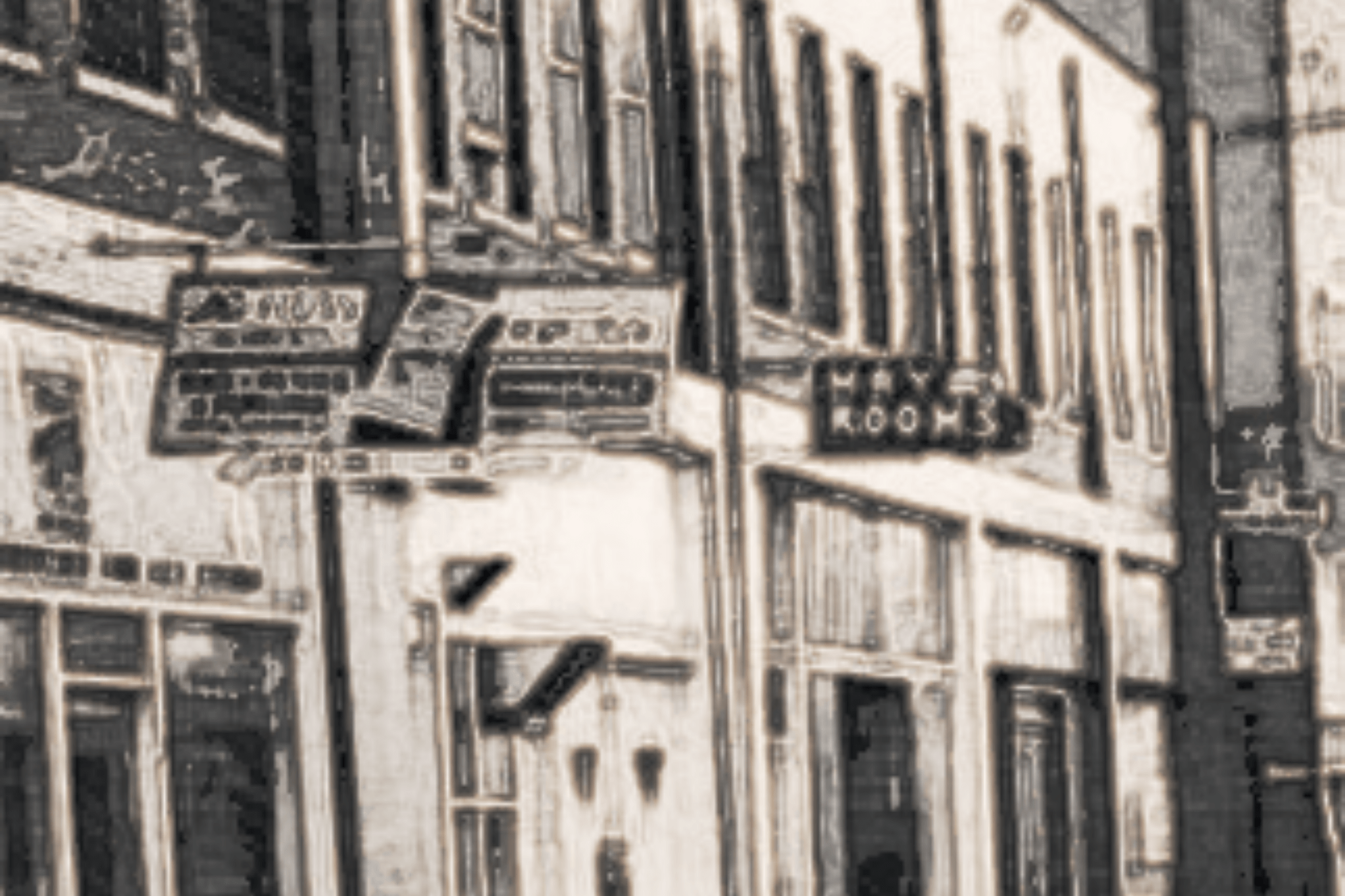
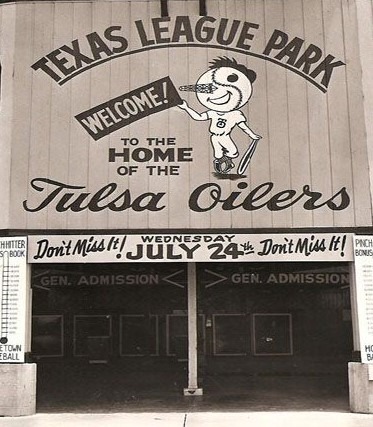
Wyatt Scott navigates all sections of town from the infamous May Rooms brothel to the Tulsa Club elite. He visits Texas League Park, home of the local Double-A baseball team, the Oilers, while maintaining his office in the Pythian building. Major historical events, including the 1934 Babe Ruth barnstorming tour of Japan and the CIA VENONA file on Soviet spying, weave their way into Scott’s life, the characters, and the narratives. Oklahoma prohibition and its bootleggers share time in the story with the vagaries of local law enforcement and criminals, both ordinary and heinous.
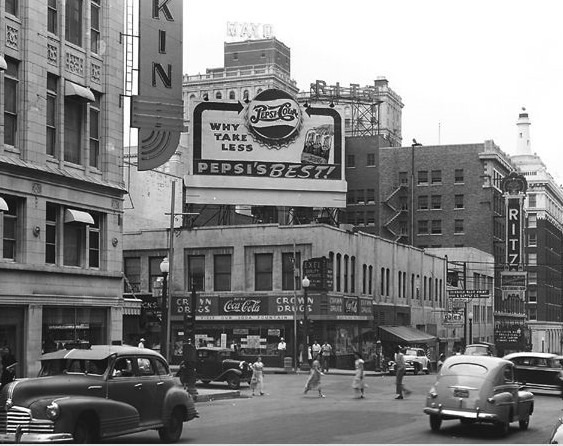
The proceedings of Scott’s Tulsa take place in June 1948 (and the coming three novels of the quartet also take place during the summer and early fall of 1948). The buildings, businesses, politicians, laws, and institutions described were authentic in 1948 Tulsa. Many events and the entire background did take place. All are blended with Scott and his fictional cohorts to present a story that could have easily unfolded like the tale told. Photos and representations of the mentioned Tulsa venues are included in that section.
Having studied Literature and Film as an undergraduate and later in graduate school, stories and storytelling have been important in S L Chalmers’ life. Beyond the fictional world, history and philosophy captured sections of his time and his mental vault. While his personal life is excellent, Chalmers assures the curious that it is not worthy of TikTok performances or blasts on X. In his own words, “I just hope to bring some reading enjoyment to the world at large and perhaps converse on my work and that of the thousands of splendid writers (and filmmakers) of today and years past.”
About the Venona Project
The term “Venona” served as a codeword for U.S. intercepts and deciphers of Soviet wires sent to and from America between 1940 and 1948. The underlying files had extremely limited access by U.S. intelligence workers due to the importance of hiding the breakthroughs on Soviet transmissions. Venona enabled Western counterintelligence to read portions of almost 3,000 Soviet diplomatic telegrams sent before, during, and after WW2. The telegrams shared a common flaw that left them vulnerable to cryptanalysis. That flaw in the messages created the unique and discrete Venona documents. American and allied services spent almost four decades deciphering the original texts and then puzzling over their meanings.
The Soviet NKVD and the MGB (later the KGB), Moscow’s secret police and quasi-civilian intelligence services, had their own foreign intelligence arms. The NKVD generally busied itself with internal repression and foreign counterintelligence that might guide covert action against Russian political factions. In foreign operations, it became overshadowed by the GRU (the Main Intelligence Directorate) run by the Soviet Army and the MGB. By the later fifties, both the NKVD and the MGB were fully replaced by the KGB. The Soviet apparatus and performance peaked during WW2, but remained robust through the fifties.
Stalin asked his intelligence services in America to collect information in four main areas. He wanted any American intelligence concerning Hitler’s plans for the war in Russia; any secret war plans discussed between London and Washington, especially regarding those for a second front in Europe; any hints that the Western allies might make a separate peace with Hitler; and, finally, American scientific and technological progress on weapons, particularly in developing an atomic bomb.
Operations in America were led by experienced hands such as Vassili M. Zarubin (cover name MAKSIM), who served as resident in New York and later in Washington, and Iskhak A. Akhmerov (cover names MER and ALBERT), the senior illegal. Some Soviet case officers. Some younger, inexperienced spies managed to contribute despite their shortcomings. One such younger spy, Anatoli A. Yatskov (Venona cover name ALEKSEI), turned out to play a key role in Soviet espionage against the atomic bomb. During the latter part of the war, the KGB gradually took over assets and networks originally established by the GRU. Soviet services appear to have given political tasks to the KGB, while focusing the GRU more on military collection, yet both collected scientific and technical data.
Soviet espionage operatives in the United States during World War II funneled information to Moscow through a handful of professional intelligence officers who sent reports to the Center and relayed orders and questions from the Center to agents in the field. In consequence, MGB and GRU stations cabled their important messages over commercial telegraph lines and sent bulky reports and documents, including most of the information acquired by agents in diplomatic pouches. As the new European war broke out in 1939, the U.S. Army began collecting encrypted Soviet telegrams, and soon thousands of cables were piling up in the offices of the Army’s Signals Security Agency (SSA). A June 1942 agreement with the Navy and FBI gave the Army exclusive responsibility for the analysis of foreign diplomatic and military ciphers, and the Army consequently had general responsibility for studying diplomatic traffic.
The Soviet Union, for some unknown reason, employed printed Matic systems with duplicate copies of the “key” on more than 35,000 pages. This was the flaw that allowed U.S. combined intelligence to make a breakthrough using these pages and assembling them from 1943 to 1946. Arlington Hall (the U.S. physical location for much of the work on decrypting Venona) and one of its workers, Lt. Richard Hallock, analyzed Soviet messages in autumn 1943 to produce the first translations. The evidence of extensive use of a duplicate key from 1944 to 1946 engendered the early translation pages. Between the work by Meredith Gardner and the separate work by Hallock and his classic code-breaking techniques, considerable progress was made in understanding the cipher.
The extreme secrecy of Venona information tended to ensure that any evidence would be viewed skeptically by some of the very communication personnel working on Soviet spying. Only a handful of American intelligence officers had access to the Venona secret. Those who did not have such access tended to misjudge the reliability of the evidence gathered against alleged Soviet agents in the 1940s. As a result, even seasoned intelligence professionals viewed the spy cases and internal security debates of the 1940s and early 1950s as McCarthyite hysteria. This attitude influenced some in the intelligence community to underestimate the threat of Soviet espionage. Those high in the U.S. government thought it more important to conceal the knowledge of Soviet encryption than to convict spies. This combination allowed irrefutably guilty individuals to escape prosecution. The American public only discovered the truth fifty years after the end of WW2 when the Venona files were released in 1995.
For greater details and a more complete history of VENONA, there are selections on both the NSA website and that of the CIA. The facts given show how much more U.S. agencies knew about Soviet spying than they ever released. Whether it was worth hiding the information from the American public or not, one can never know. Perhaps America did better against future Soviet spying by hiding the secret, but perhaps the schism in American politics would not have been so wide had everyone known how severely the Soviets did penetrate U.S. and British government bureaus.